

When launching a startup, one of the most critical technical decisions you will make is how to build your mobile application. Choosing the right framework isn’t just a technical detail; it directly impacts your budget, your timeline, and ultimately, your user experience.
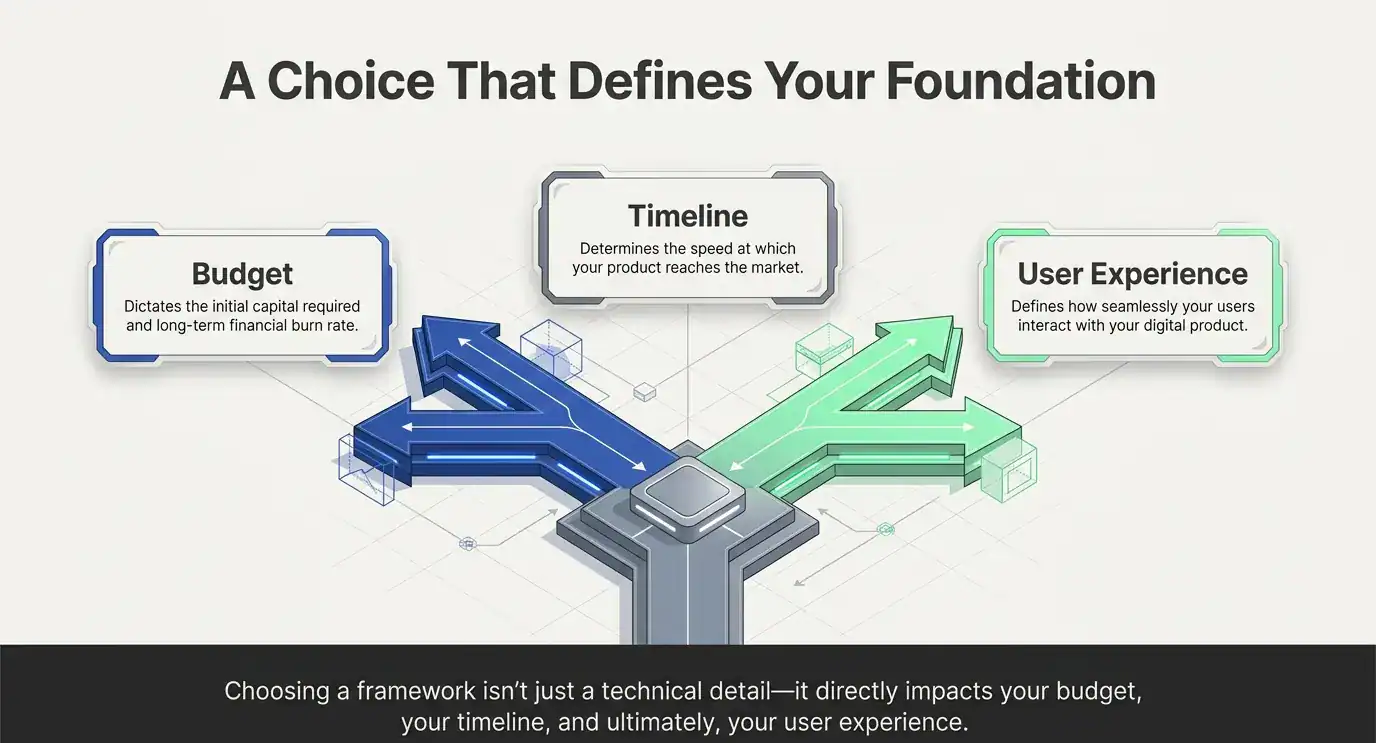
For founders navigating mobile app development for startups, the choice usually boils down to two main paths: Native or cross-platform development. Here is a straightforward breakdown to help you decide which approach aligns with your business goals.
Understanding Native App Development
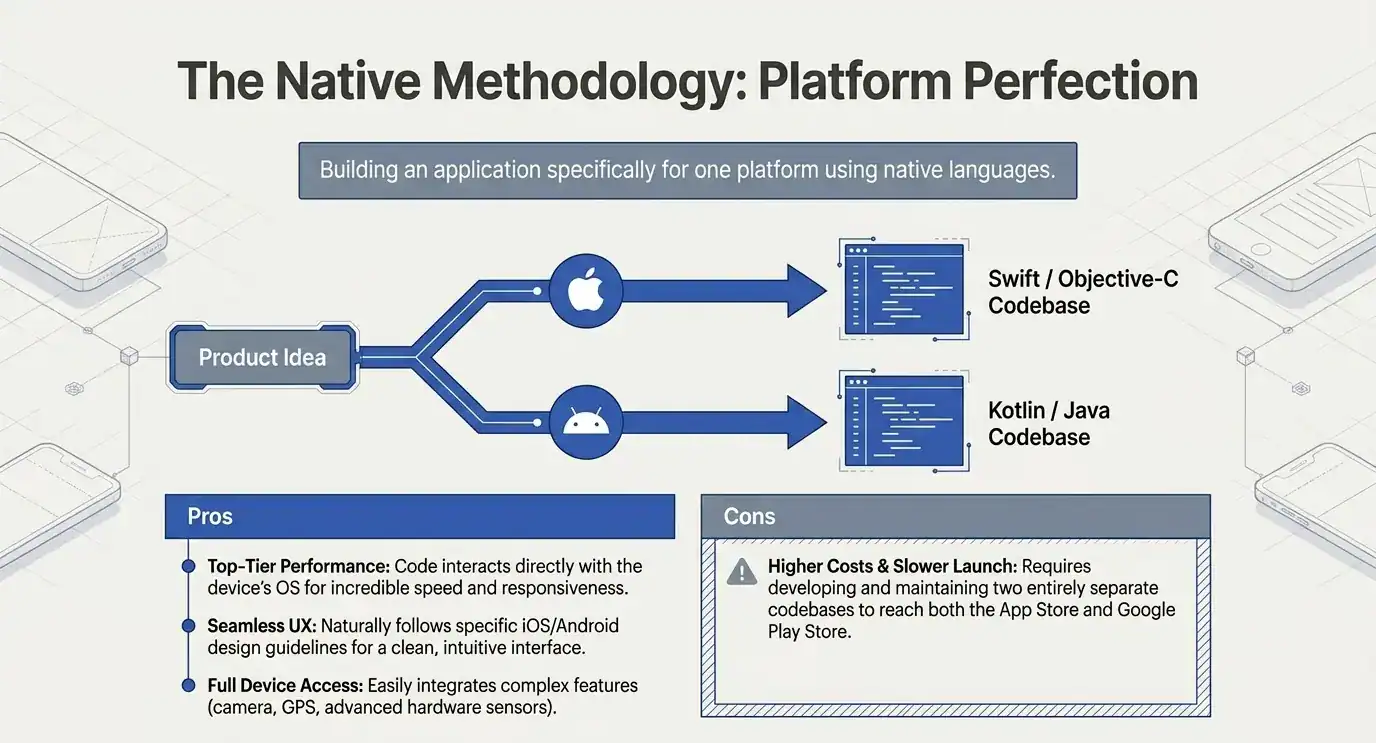
Native app development involves building an application specifically for one platform—either iOS (using Swift or Objective-C) or Android (using Kotlin or Java).
The Pros:
- Top-Tier Performance: Because the code interacts directly with the device’s operating system, native apps are incredibly fast and responsive.
- Seamless User Experience: Native apps naturally follow the specific design guidelines of iOS or Android, resulting in a clean, professional, and intuitive interface that users expect.
- Full Device Access: It is much easier to integrate complex device features like the camera, GPS, or advanced hardware sensors.
The Cons:
- Higher Costs & Slower Launch: Building native means developing and maintaining two separate codebases if you want to be on both the Apple App Store and Google Play Store.
Understanding Cross-Platform App Development
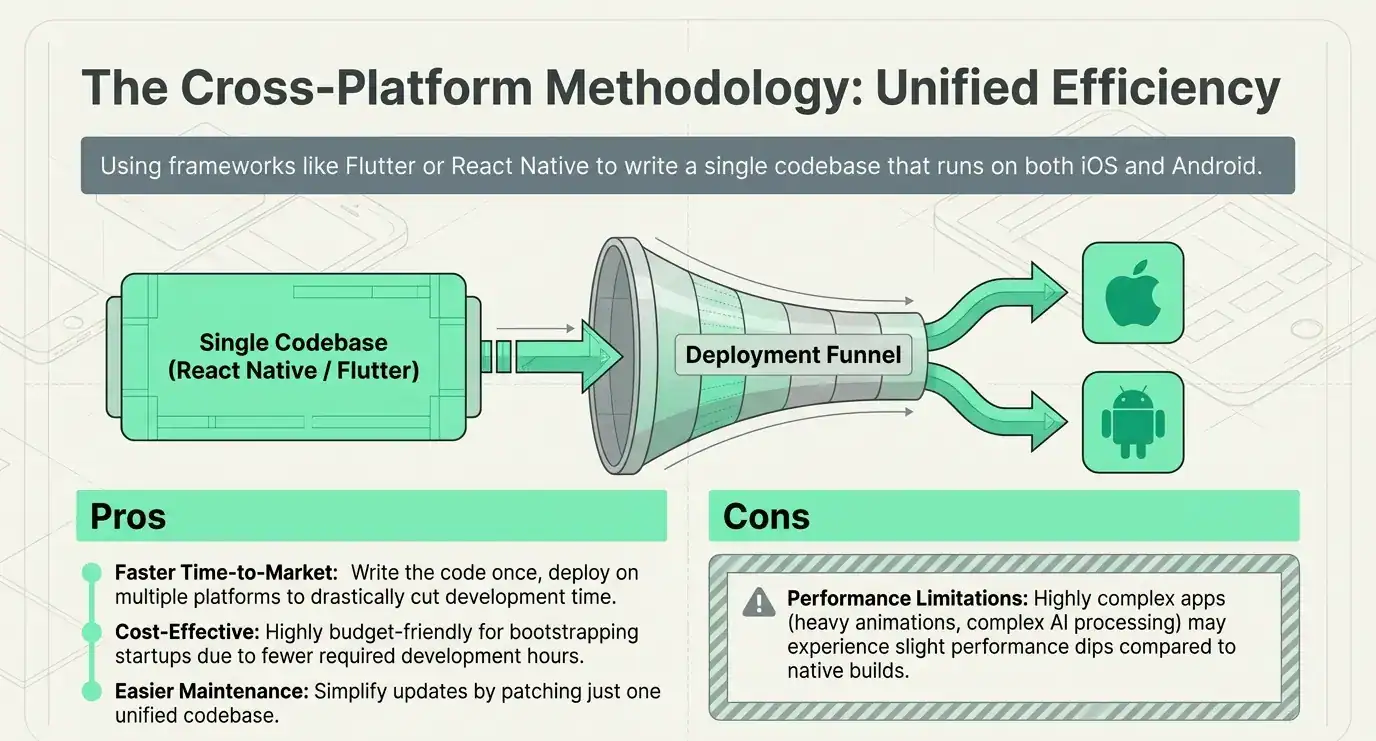
Cross-platform development uses frameworks like Flutter or React Native to write a single codebase that runs on both iOS and Android.
The Pros:
- Faster Time-to-Market: Writing the code once and deploying it on multiple platforms drastically cuts down development time.
- Cost-Effective: For a startup bootstrapping its initial launch, cross-platform is often more budget-friendly because it requires fewer development hours.
- Easier Maintenance: Updating the app is simpler since you only have to patch one codebase.
The Cons:
- Performance Limitations: While frameworks like Flutter are incredibly fast, highly complex apps with heavy animations or complex AI processing might see a slight dip in performance compared to native builds.
How to Make the Right Choice for Your Startup
There is no one-size-fits-all answer, but you can base your decision on your immediate priorities:
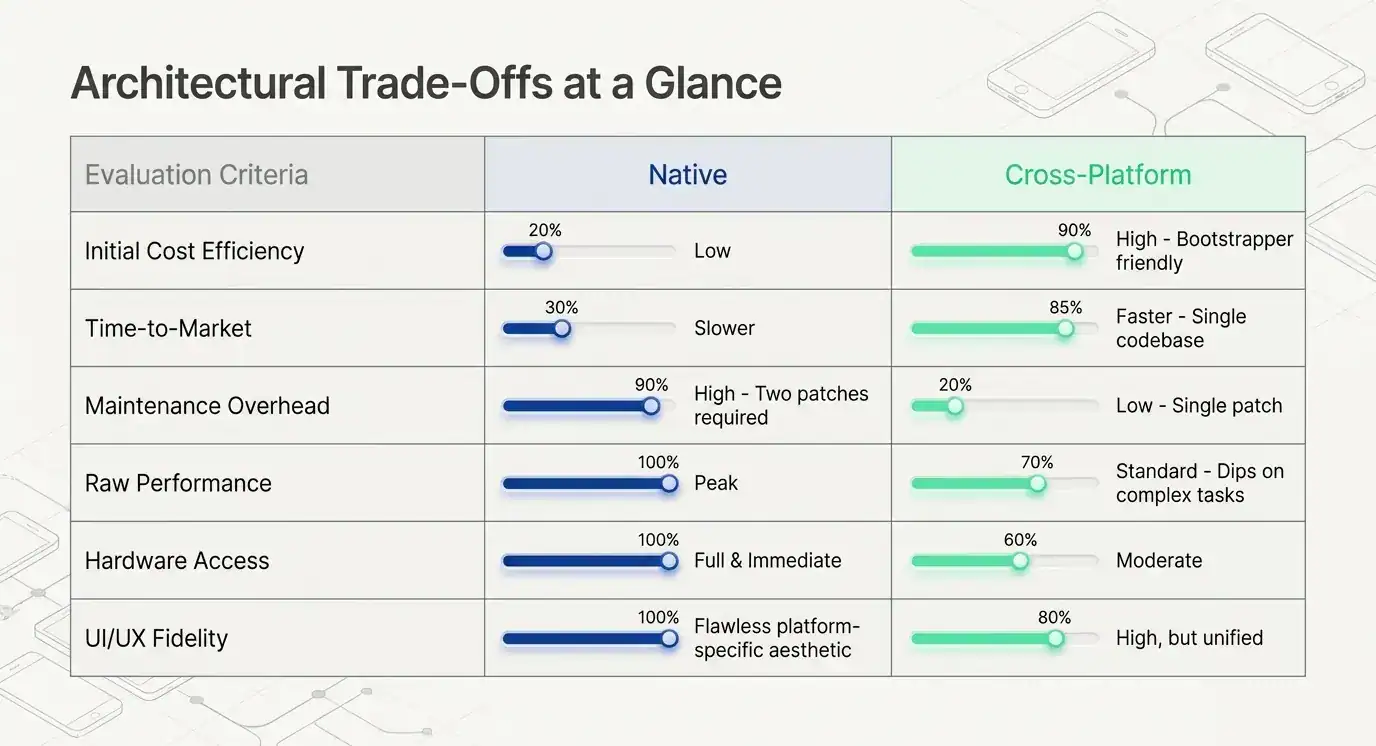
- Choose Cross-Platform if: You need to test an MVP (Minimum Viable Product) quickly, you have a tight budget, and your app relies on standard features (like e-commerce, social feeds, or content delivery).
- Choose Native if: Your app requires heavy processing, complex animations, or relies heavily on specific smartphone hardware. If absolute peak performance and a flawless, platform-specific aesthetic are your top priorities, native is the way to go.
Bring Your Vision to Life
Building a startup is hard enough without having to worry about technical roadblocks. Whether you need a lightning-fast native application or a highly efficient cross-platform build, having the right development partner is crucial.
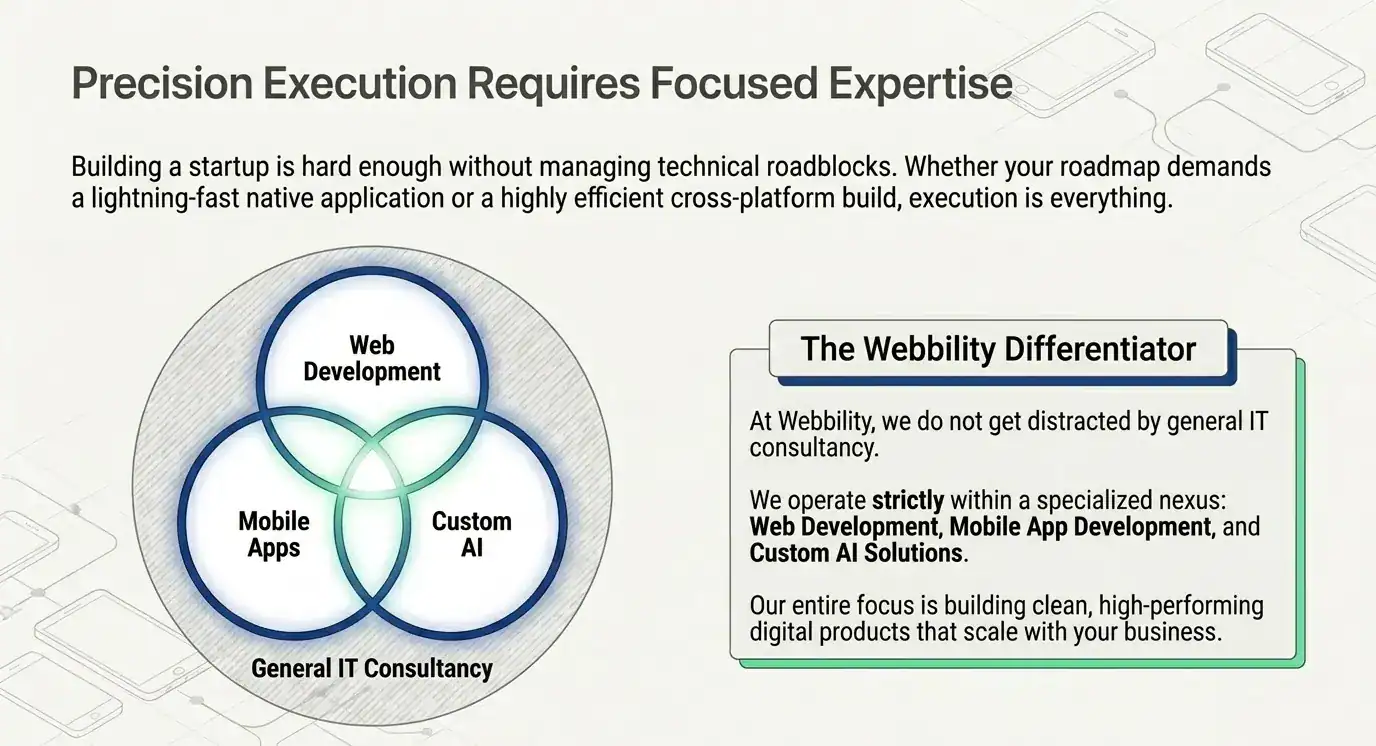
At Webbility, we specialize strictly in web development, mobile app development, and custom AI solutions. We don’t get distracted by general IT consultancy; we focus entirely on building clean, high-performing digital products that scale with your business.